
Your Position: Home - Geomembranes - Geomembrane Liner Installation Guide
An important step in projects involving geomembrane liners is to understand the benefits of the product and the best course of action at each step of the installation. Installation of geomembrane liners is typically performed by qualified engineers and technicians for welding and installation techniques, site preparation, proper installation procedures, etc. This article will provide you with a guide to the installation of geomembranes.
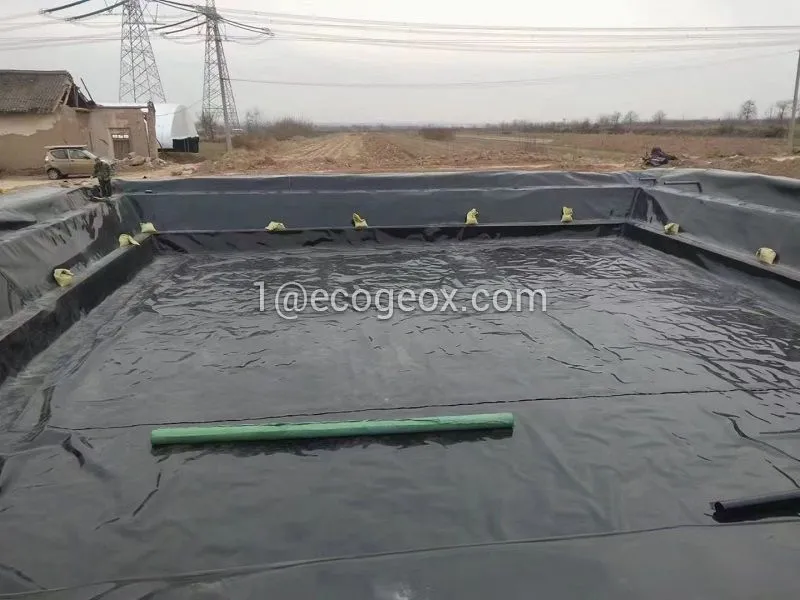
Notwithstanding specifications, it is good practice to test product samples. Manufacturing quality control is an important set of tests to ensure product compliance with U.S. standards. Geomembrane liners should pass cosmetic inspection. The liner should be new and free of physical defects such as holes, blisters or visual signs of contaminants. The final product should also be supplied as a continuous sheet with no factory welds in the roll.
If the selected product passes all quality control checks, you are ready to begin preparing the job site for installation.
Develop an HDPE geomembrane installation plan based on the geomembrane lining system design.
Procure quality HDPE geomembrane products based on the design requirements, especially the required specifications.
Ground Treatment. Carefully remove all sharp hard objects from the ground that may damage the geomembrane, fill potholes, level the soil surface or repair the slope.
Installation Environment Requirements. Outdoor temperature above 5℃, wind below level 4, no rain, no snow and no rain.
Geomembrane liner welding tools. Welding tools generally include HDPE liner welder, hot air torch, sander, vacuum tester, inflatable leak detector: portable baler and other accessories.
When your geomembrane arrives and is ready for the roadbed, you are ready to begin laying the product. Here are some tips and best practices for getting the best installation results.
First, it's best to only deploy as much geomembrane as you can anchor and weld that day. Placing only what you can install will help you avoid unnecessary liner exposure.
Second, it is recommended to avoid driving vehicles over exposed geomembranes. If ground equipment is required, use only approved low ground pressure vehicles or vehicles that can pass the test pad without damaging the liner.
Third, you should use sandbags or similar types of ballast to temporarily secure the geomembrane liner in place during the installation process.
Fourth, the liner may span voids or low-lying areas in the roadbed during placement. These areas should be graded to ensure close contact between all portions of the liner and the roadbed. In addition, waves and wrinkles can be minimized by installing the geomembrane at optimum ambient temperatures to minimize thermal expansion and contraction.
Finally, check to ensure there is overlap between geomembrane sections for welding and testing. Overlap should be no less than 3 inches.
Once all sections have been placed and adequately anchored, you are ready to begin welding the panels together. In most cases, welding should be done when the geomembrane surface temperature is above 0°C. It is possible to work outside of these parameters, but additional steps should be taken to ensure safe and proper welding on site. Fusion welding equipment is ideal, but extrusion welding can be used if necessary.
Quality control testing should be performed in conjunction with the welding process.
Since environmental conditions can greatly affect the quality of each weld, it is recommended that welding technicians perform a test weld prior to each weld. The test weld should be performed in accordance with ASTM D 6392 using the same conditions, equipment and materials used in the manufacturing process. Sections of the test weld should be cut and tested according to the minimum acceptable weld strength values.
Production welds shall be tested using nondestructive methods prior to covering the geomembrane. Any areas that fail the test shall be marked, repaired and retested. Non-destructive weld testing methods may use vacuum chambers, pneumatic or spark testing equipment.
Are you interested in learning more about geomembrane? Contact EcoGeoX today to secure an expert consultation!
Additional reading:341
0
0
Previous: None
Next: none

Comments
All Comments (0)
Related Articles
Understanding Pipe Holding Clamps: Applications and Benefits
Understanding Pipe Holding Clamps: Applications and Benefits
By venusgeng
368
0
0
7 Essential Tips for Custom Spring Hanger Support Design
When it comes to designing custom spring hanger supports, there are essential considerations that can significantly impact the overall performance and longevity of your systems
By Benjamin
366
0
0
Top Solutions for Common HDPE Geomembrane Liner Purchase Concerns
When it comes to purchasing HDPE geomembrane liners, customers often face several challenges that can lead to confusion and frustration
By May
229
0
0
Essential Guide to Insulated Pipe Clamps for Cryogenic Infrastructure
In the world of advanced engineering and industrial applications, managing temperature extremes is crucial for the integrity and performance of various systems
By Justin
398
0
0
Key Considerations for Purchasing Stainless Steel Equal Tees
When it comes to plumbing and piping systems, one crucial component that often requires careful consideration is the stainless steel equal tee
By Helen
311
0
0
7 Wire PC Strand Zinc Coated vs. Uncoated: Which Reigns Supreme?
When comparing 7 Wire PC Strand Zinc Coated to its uncoated counterpart, many factors come into play that can affect performance, longevity, and cost-effectiveness
By CC
326
0
0
10 Essential Benefits of Geosynthetics Clay Liners for Modern Engineering
Geosynthetics Clay Liners (GCLs) have become indispensable tools in modern engineering and environmental projects
By Steve
183
0
0
Metal Exterior Wall Panels Explained
When planning the exterior of a building the choice of wall materials has a huge impact on performance aesthetics and long term value.
By Geym
110
0
0